My interest in gardening came about because of insects, or a lack of them. I haven’t been an insect lover for all that long. They have always just been one part of the natural world that I love so much. In truth, birds were always my thing. But one day I found a Metallic Bluish-green Cuckoo Wasp (Chrysis angolensis), and that little lady had me mesmerized.
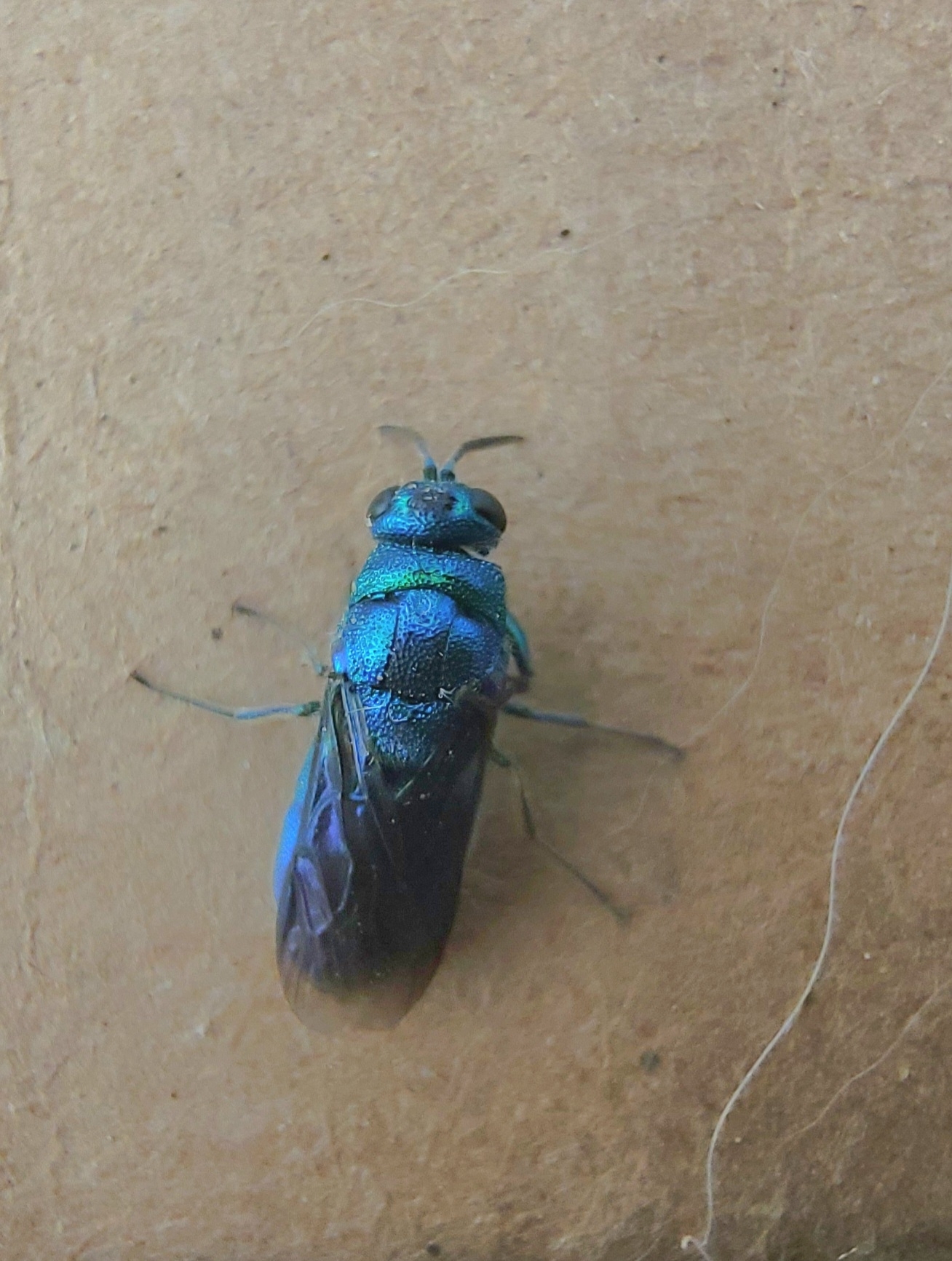
How could such a beautiful little jewel be flitting around my front yard without my ever noticing her? I had to learn more about her. When I first saw her, I had no idea that she was a wasp. Most people don’t think of wasps as beautiful. They automatically think of those aggressive-looking ones with the legs dangling, ready to strike you when you get too close to their papery, celled home. My cuckoo wasp looked nothing like this. And she didn’t behave aggressively, at least not towards me.

Like many of the pollinators in my garden, she was focused on Spanish Needle (Bidens alba). Everyone loves Bidens alba! Except me. It’s not the prettiest of plants, and the needles are annoying. But I keep it around for the insects. I took photos of her and then I posted my observations in iNaturalist. From there, I learned that she is a parasitic wasp. She is a parasitizer of the mud dauber, which we have plenty of.
So my lesson is this: if I want to see more Metallic Bluish-green Cuckoo Wasps, I have to leave the mud daubers alone and let them build their little mud houses. Without the mud dauber, there is no place for my favorite wasp to lay her eggs.
And what does the mud dauber do? Is she solitary or communal? Does she sting? What does she eat? Once I started going down the rabbit hole, I realized that insects, and the plants they feed from, are going to become a huge part of my life.
 Buzzing Blossoms