
Last year I had a sad experience with a beautiful Antheraea polyphemus, aka Polyphemus Moth larvae. While walking on my trail, I saw a large caterpillar hiding in the leaves of a Turkey oak tree. This thing was humongous! It was the last instar of a Polyphemus. I snipped the branch the larvae was on and put it in a bug tent on my back patio. I gave it fresh oak leaves every day.
After a short spell, I noticed the caterpillar looked paler, like it was anemic. I know larvae don’t have red blood cells, or even “blood” for that matter. But it just looked weak and sickly. I tried more leaves, different oaks, and other plants, but to no avail. And then a grotesque thing happened. Small white, rice grain sized white things started to poke out of the skin of the caterpillar. The caterpillar looked like it was in pain when the little creatures poked out. Eventually, it was covered in white squirmy grains. These were most likely a type of tiny parasitic wasp, although I never discovered the exact species.
I was sad that I wouldn’t have a big beautiful moth to release. For days, I went back out to the trail looking for more caterpillars, but I never found one.
A year later and I was on my morning walk. I noticed an egg-sized case hanging from an oak tree, vaguely disguised with some old oak leaves hanging on the outside of the cocoon. I returned later that day with some scissors and snipped the twig the cocoon was tied to. I put it in my pocket and carefully walked home with it in my pocket.
I put the cocoon in a bug tent with oak leaves and twigs from my yard and set the tent in a shady spot. I had no idea how old this cocoon was, and I also had no idea what might be inside.
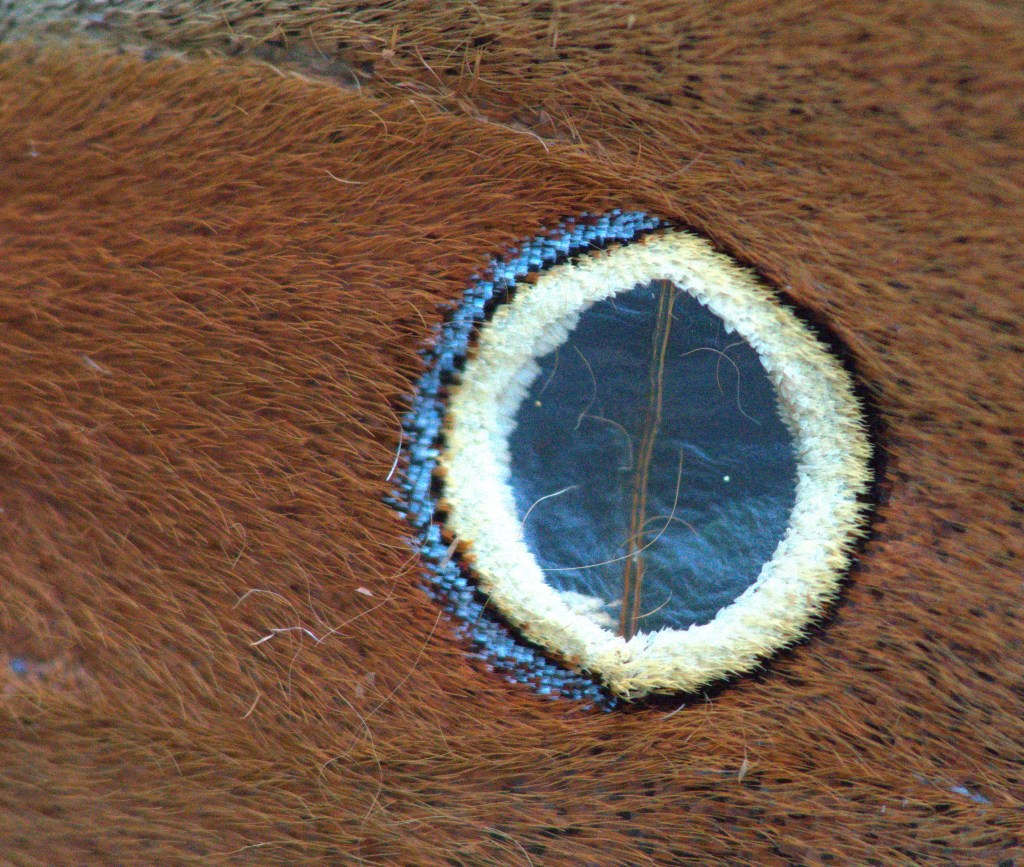
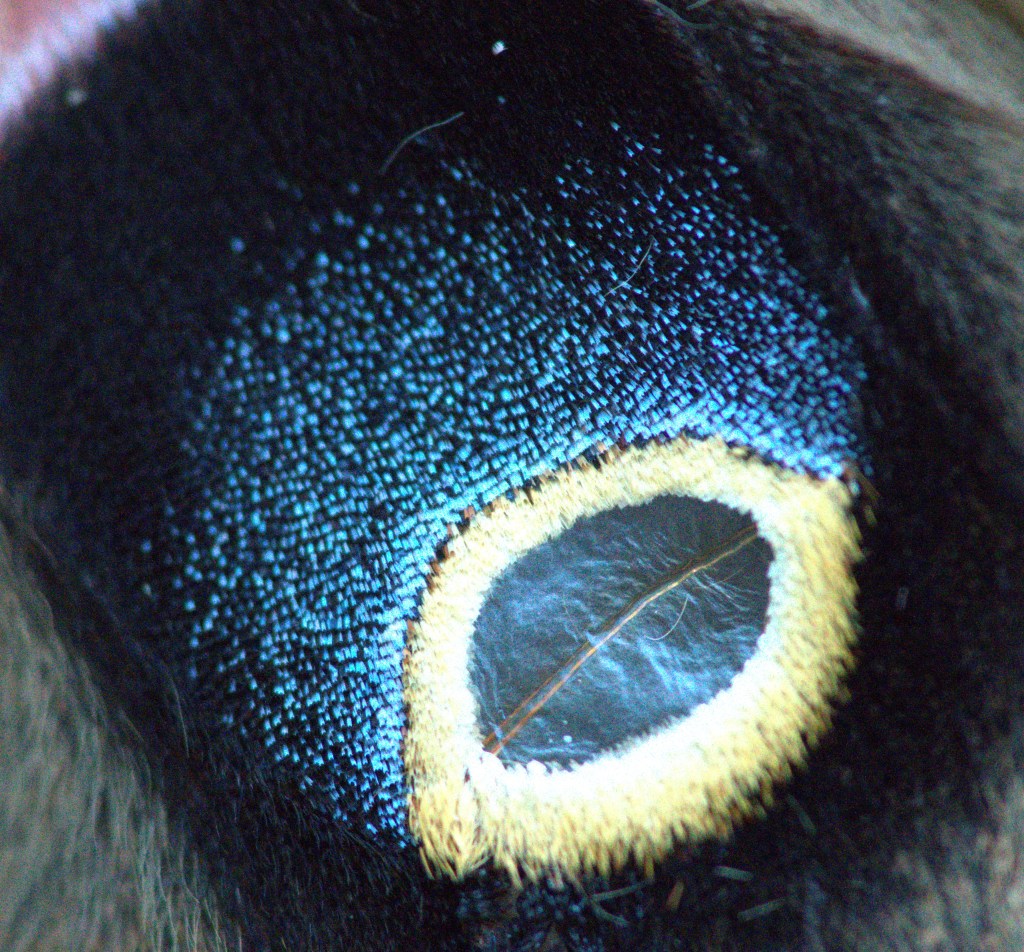
Then I waited. After a week I was starting to get discouraged. Maybe it was dead inside. But on the 10th day, a lovely creature appeared in place of the cocoon. The wings were wrinkled and her abdomen was fat and juicy looking. I had a Polyphemus Moth! It was a female, and she spent the whole day resting up and filling her wings. At 4pm, I did a little photo shoot with her and then took her to the trail where I first found the original caterpillar a year ago. I put her on the fence near several oak trees. And now she can start a brood of her own.
 Buzzing Blossoms