
I didn’t grow up as an insect aficionado. I found them interesting, but I was always more interested in reptiles, amphibians, and birds. I’ve always loved birds. No, insects were just OK.
But there’s a saying: You don’t know what you’ve got until it’s gone.
And I can see now that the insects are almost gone. Maybe people who grew up in suburban environments don’t know this, but insects were everywhere! Fireflies, grasshoppers, katydids, butterflies, caterpillars, roaches (yuck), and, yes, mosquitoes. There were honeybees, bumble bees, carpenter bees, wasps, horseflies (ouch), and dragonflies.
These days, though, you really have to look hard to see the insects. They aren’t easy to find anymore. And sadly, humans have made this a reality.
I don’t like this. This feels wrong. Our yards are sterile, quiet, lifeless. So many homeowners go to big box stores, buy the brightest, cutest flowers and plant them until they die, then they go back and do it all over again, year after year. These plants come from Vietnam, India, China, Australia, South America, everywhere except for North America. These plants don’t belong here, and the insects don’t know how to use them. Some exotic plants are adopted by the birds and insects. Bottlebrush seems to attract some hummingbirds and pollinators, but for the most part you won’t see a lot of bees or butterflies buzzing around people’s front yards.
In Florida, when I walk in the woods, I see lots of bees hanging around the Dahoon holly trees and the saw palmettos. It’s as if all the bees in the neighborhood found a goldmine and they all want a piece of the action. The bushes and trees are alive with the buzzing sounds. I miss that sound. Dahoon holly and saw palmetto are native to Florida, and the insects know this. The plants and the insects work together, as they have for millennia.
After noticing this sterility in my own neighborhood, I started reading up on this. What I’ve discovered is not just disturbing. It’s terrifying. Without these animals, we are dooming ourselves. Even if you don’t like insects, you probably would prefer not to pay $10 for a quart of strawberries or $15 for a bag of carrots. Without insects, that is a possibility. Most of our fruits and vegetables require pollination by insects. Seventy five to eighty five percent of our fruits and vegetables need the assistance of pollinators. Honeybees aren’t the only pollinators, either. Butterflies, moths, beetles, and wasps all help with pollination.

Without insects, we are in some trouble.
So, I’m going to fix what I can on my own property. Pesticide applications to the lawn have ceased. We no longer use chemical fertilizers or weed killers. And I am eliminating non-native plants in the yard and on our trail.
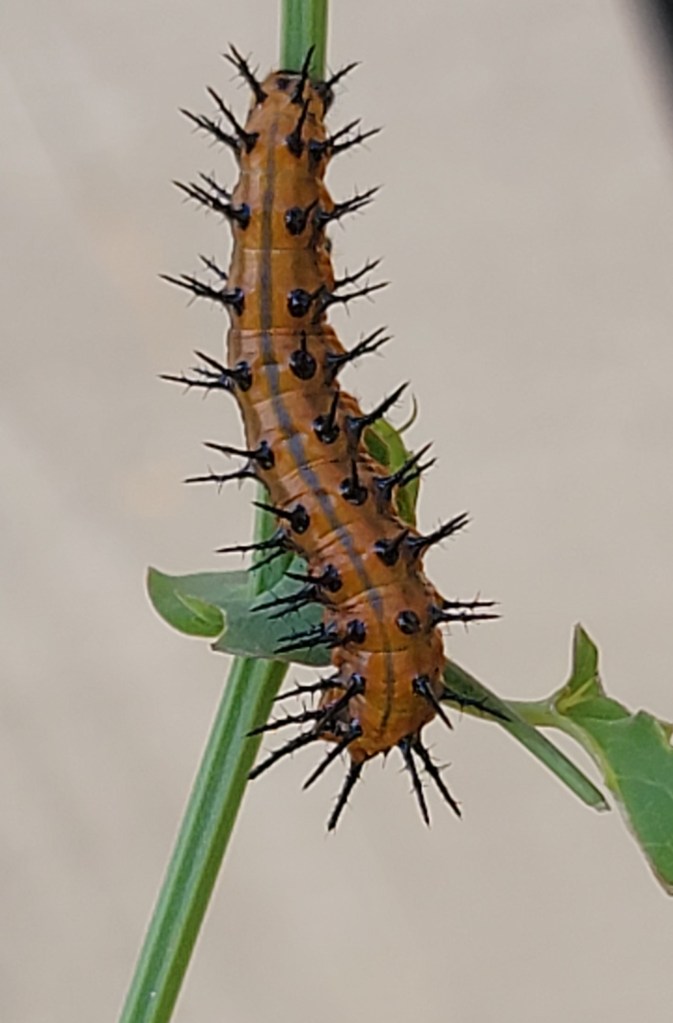
I am going to actively grow the plants that I know insects like. I want to see more butterflies and moths especially, so I am investigating each species carefully and determining what our property can support. For example, monarchs are wonderful and I have many milkweeds all around the house, but if I am the only person growing milkweed, then these poor monarchs may not survive. I do have over an acre of 50 year old and older sweetgum, oak, and loblolly pine trees. That might be enough to support a few luna or io moths.

This will require some thought and planning, and I am sure I am going to make a lot of mistakes. But I have to do something. Hopefully, in 30 years I will look at my yard and walk on my trail, surrounded by butterflies and moths, listening to the buzzing bees, all while chewing on a carrot that didn’t cost me $10.
 Buzzing Blossoms